
Sympathy Flowers: How to Choose and What to Write
Knowing what to do when someone dies is one of the harder things life asks of us. Most people want to do something that acknowledges the loss mindfully, to support the bereaved family but doing what is appropriate is always a difficult task. What to say or how to say it, is probably the toughest part during this unfavourable time.
Flowers have been used as a gesture of sympathy for centuries, and for good reason. They don't require a response and gracefully lets them know that you are thinking of them.
Sending sympathy flowers is one of the most comforting things you can offer. This guide covers which flowers are appropriate, which to avoid, when to send them and. Perhaps most importantly, knowing what to write on the card when the right words feel impossible to find.
The different between Sympathy flowers and Funeral flowers
These two terms are often used interchangeably, but they refer to different things and are delivered to different places. Funeral flowers are sent directly to the funeral home, the church, crematorium or ceremony location. They form part of the formal tribute and are typically larger, more structured arrangements: wreaths, sprays, and standing tributes. If you are a close family member or are specifically contributing to the funeral, this is what you would order.
Sympathy flowers or what we like to call Thinking of You Flowers are sent directly to the home of the bereaved family, ahead of the funeral, after it or in the weeks that follow. They are smaller, more personal, and more like a thought. A hand-tied bouquet delivered to someone's front door says something different from a wreath at a service. It says: I thought of you specifically. I am thinking of you now and I am here if you need me. For most people, friends, colleagues, neighbours and distant relatives, sympathy flowers sent to the home are the more appropriate choice.
When to send sympathy flowers
There is never a right moment but different gestures suit different timing. Sending Flowers that arrive a week or two after the funeral are often received as the most meaningful of all.
As soon as you hear the news
Sending immediately is appropriate for close friends and family. It signals that the loss registered, that it mattered and that you are present.
Before the funeral
flowers at home in the days before a service provide comfort during one of the hardest periods.
After the funeral
this is when many people find the gesture most meaningful. The funeral is a focal point that ends. What follows is realisation and grief. Flowers that arrive here tell the bereaved they have not been forgotten their loved ones now the occasion has passed.
Weeks later
There is no expiry on sympathy. Sending flowers three weeks after the passing, with a note that says you are still thinking of someone, is a generous and often unexpected gesture.
Which flowers to send
Choosing the right type of bouquet is the biggest consideration
If you knew the person who died well or know the tastes of the bereaved family, let that be the deciding factor of your choice. Flowers that reflect something personal about the deceased, their favourite stem, a colour they loved carry a more meaningful message than the traditional option (white flowers).
If you did not know them well or are less certain of their preferences, the following are the most appropriate choices.
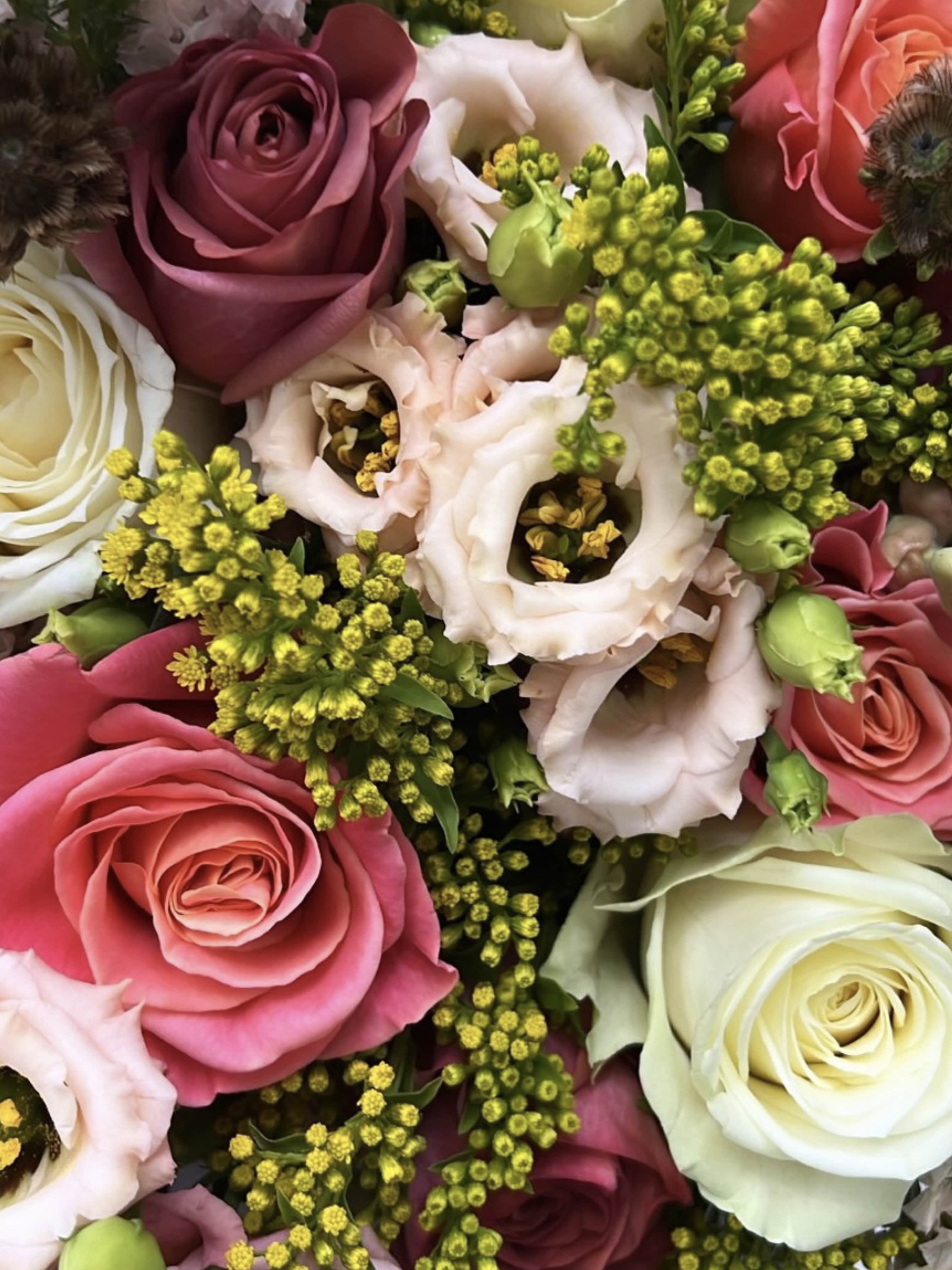
White roses are the most universally appropriate sympathy flower. A simple, well arranged bouquet of white roses says everything it needs to.
Carnations have a long history as sympathy flowers. White carnations represent purity and innocence.
Pink carnations from the Victorian language of flowers, carry the meaning "I will never forget you."
Orchids represent eternal love and are increasingly popular as a sympathy gift. A potted orchid lasts months rather than days, which is a beautiful gift in itself.
White Lisianthus is visually similar to lilies, but completely safe for homes with cats. It is an excellent choice when you want something elegant and lily-like without the toxicity risk.
Wax Flower works beautifully as a supporting stem in any sympathy arrangement.
Colours for sympathy flowers
White is the most traditional and universally appropriate choice. It represents purity and peace. For any relationship and any background, white flower bouquets are a safe and meaningful option.
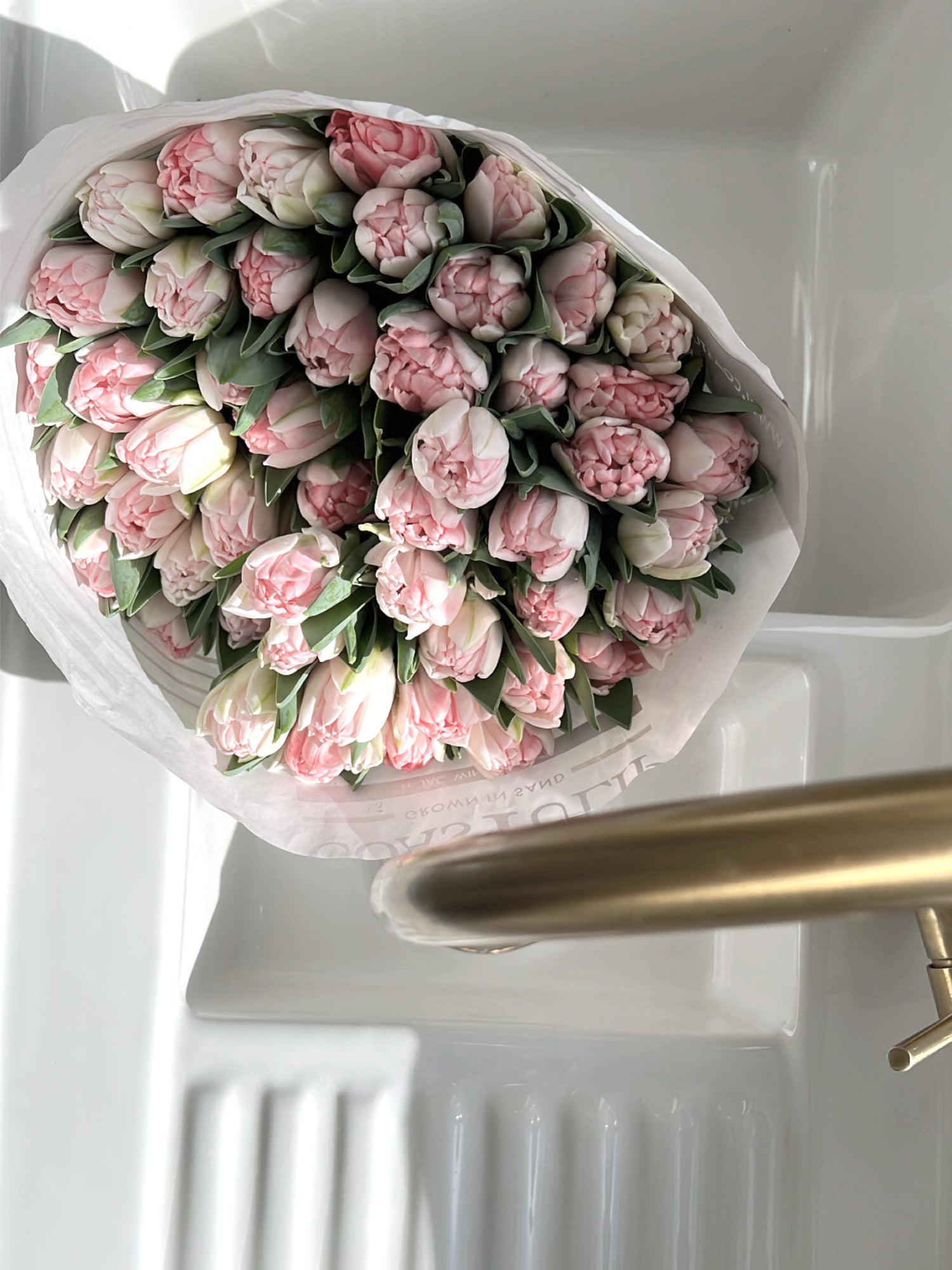
Pale pink softens a sympathy arrangement without moving away from the appropriate register. Pink represents affection and remembrance and sits comfortably alongside white. Consider our petite bunch, a budget friendly letterbox arrangement comprising on pinks and whites.
Cream and ivory are elegant and warm. They carry the sentiment of white without the starkness and look beautiful in a mixed arrangement.
Lilac and soft purple represent dignity, admiration, and the honouring of a life. A soft purple arrangement is a thoughtful choice for someone who would have appreciated something with a little more character.
Yellow can work but requires care. It represents friendship and remembrance, but its brightness can feel too cheerful in a strictly formal context. Soft, muted yellows are a much better option than bold ones.
Try to avoid bright red and vibrant orange coloured bouquets as both are associated with celebration and joy rather than sympathy. This option may come across insensitive, regardless of the intention.
Religious and cultural considerations
Flowers are not universally welcome across all faiths and traditions and it is worth being aware of this before sending.
Christianity: Flowers are widely welcomed across Catholic and Protestant traditions. Some Reformed Protestant denominations prefer simpler arrangements.
Judaism: Sending flowers is not customary in the Jewish faith, either at the funeral or during the shiva period. A food basket or a charitable donation in the name of the deceased is the more appropriate gesture.
Islam: Islamic funerals typically do not include flowers. If the family is open to receiving them, keep any arrangement very simple.
Hinduism: Flowers are more commonly associated with celebration than mourning in Hindu tradition.
Buddhism: White flowers are the traditional choice for Buddhist mourning. Avoid red, which is associated with happiness and celebration.
Sikhism: Flowers are not part of Sikh funerals. A card or a charitable donation is more appropriate.
What to write on a sympathy card
This is often the hardest part. Most people feel paralysed by the blank card and end up writing something that feels inadequate.
A few things that help: Say less than you think you need to. The instinct is to fill the space with words, however resist the rambling. Short, sincere, and specific is better than long and general every time.
Avoid explaining or justifying. Phrases like "everything happens for a reason" or "at least they are no longer suffering" are almost never as comforting to the recipient.
Using the name of the person who passed is a sincere touch and shows acknowledgement. It tells the bereaved family that the person was loved and remembered by others. If you did not know them well, a short, warm expression of sympathy is entirely sufficient.
What to write: examples by relationship
These are common messages, but the best of messages are the ones written in your own words. Some examples to help:
For a close friend: "I've been thinking about you constantly since I heard. I loved [name] so much and I know how enormous this loss is. I'm here whenever you need me, for anything at all."
For a parent of the bereaved: "[Name] was everything a parent could be proud of — generous, funny, and so loved by everyone who knew them. I'm thinking of you and the whole family. With all my love."
For a colleague: "I was so sorry to hear about the loss of [name]. Please know that you are in my thoughts at this difficult time. I hope these bring a moment of comfort."
For a neighbour or acquaintance: "With our deepest sympathy on the loss of [name]. We are thinking of you."
Sending sympathy flowers to pet owners
If you are sending flowers to a home with cats or dogs, please be aware that several common sympathy flowers are toxic.
White lilies, the most traditional sympathy stem are fatally toxic to cats. All FlowerFix sympathy bouquets can be ordered in a 100% pet-friendly variant. Our pet safe collection uses only stems verified safe for cats and dogs, including white roses, freesias, lisianthus, waxflower, snapdragons, all of which are appropriate for a sympathy note. If you are in any doubt about whether the household has pets, order lily-free or chat to our customer service team for advice.
Related guides:
Flowers safe for cats: the complete UK guide →
Get well soon flowers: what actually helps →
Flowers for all occasions and homes



FAQ's
Everything you need to know about your flower delivery in easy to digest snapshots.