
The Complete Guide to Pet-Safe Flowers UK
Approximately 13 million households in the UK own a cat, dog, rabbit, or pet bird. A significant proportion of those households regularly receive or display cut flowers. The two facts create a risk that most people manage by instinct rather than knowledge, which means many pets are exposed to toxic flowers every week without their owners realising.
This guide covers everything you need to know to keep flowers and pets in the same home safely. Which flowers are genuinely safe. Which are toxic and how dangerous. What to do in an emergency. And where to buy flowers that have been designed from the ground up with pet safety in mind.
FlowerFix: the UK's only lily-free guaranteed letterbox florist
Every bouquet in our pet safe collection is verified non-toxic to cats and dogs. Lily-free, gypsophila-free, florist-checked every week. As awarded by Glamour Magazine: Best Pet Safe Letterbox Flowers 2025. Free UK delivery included.
Shop pet safe flowersSafe flowers vs toxic flowers: the complete comparison table
The table below covers the most commonly gifted and displayed cut flowers in the UK. Safe means considered non-toxic to the species indicated. Toxic means confirmed toxic with adverse effects documented. Caution means limited data or mild risk from large quantities only.
| Flower | Cats | Dogs | Notes |
|---|---|---|---|
| Roses | SAFE | SAFE | All rose varieties are non-toxic. Trim thorns if pets investigate the vase. |
| Sunflowers | SAFE | SAFE | Non-toxic. Pollen from the central disc can cause mild irritation if eaten in quantity. |
| Freesias | SAFE | SAFE | Non-toxic and fragrant. A reliable pet-safe choice. |
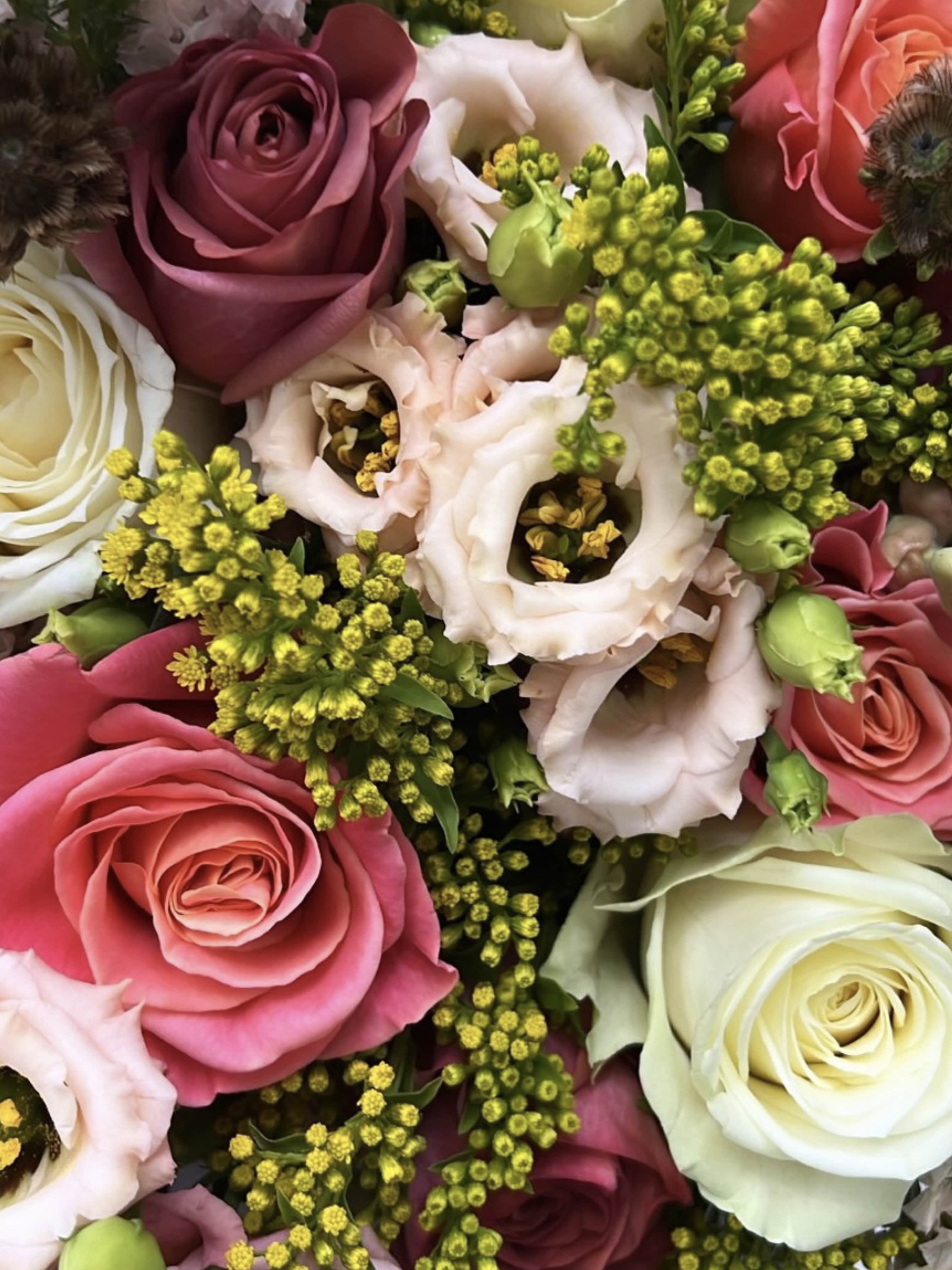
| Lisianthus (Eustoma) | SAFE | SAFE | Non-toxic. The best cat-safe alternative to lilies for a luxury look. 10 to 14 day vase life. |
| Snapdragons | SAFE | SAFE | Fully safe. Excellent vase life. Often the last stem standing in a mixed bouquet. |
| Waxflower | SAFE | SAFE | Non-toxic filler. The best pet-safe alternative to gypsophila. Lasts 2 to 4 weeks. |
| Statice (Limonium) | SAFE | SAFE | Non-toxic filler. Dries naturally without losing colour. Excellent long-lasting pet-safe option. |
| Germini Daisies (Gerberas) | SAFE | SAFE | Non-toxic, vivid, cheerful. One of the most colourful genuinely pet-safe flowers available. |
| Matthiola Stocks | SAFE | SAFE | Non-toxic. Fragrant and beautiful. Good pet-safe option for scented arrangements. |
| Orchids (Phalaenopsis) | SAFE | SAFE | Most varieties non-toxic. One of the few genuinely luxurious pet-safe flowers. Lasts weeks. |
| Solidago (goldenrod) | SAFE | SAFE | Non-toxic yellow filler. Long-lasting and cheerful in mixed arrangements. |
| Scabiosa (pincushion flower) | SAFE | SAFE | Non-toxic. Beautiful wildflower texture. Good pet-safe choice for summer arrangements. |
| Phlox | SAFE | SAFE | Non-toxic and fragrant. One of the few scented flowers that is genuinely safe for cats and dogs. |
| Lilies (all Lilium species) | FATAL | MODERATE | Fatal kidney failure in cats. Emergency situation. No safe level of exposure. |
| Tulips | TOXIC | TOXIC | Common in UK spring bouquets. Toxic alkaloids throughout. Keep away from all pets. |
| Daffodils | TOXIC | TOXIC | Toxic to cats, dogs, rabbits, and birds. Can cause cardiac effects in severe cases. |
| Chrysanthemums | TOXIC | TOXIC | Found in the majority of UK supermarket bouquets year-round. Contain pyrethrins. |
| Gypsophila (baby's breath) | TOXIC | TOXIC | The most common filler in supermarket bouquets. In almost all budget arrangements. |
| Peonies | CAUTION | CAUTION | Mildly toxic. GI upset if ingested. Keep out of reach of pets that chew plants. |
| Hydrangeas | TOXIC | TOXIC | Contain cyanogenic glycosides. Popular in summer and wedding arrangements. |
Pet-safe flowers for cats specifically
Cats are the most at-risk pet in a flower-owning household because they are independent, agile, and often investigate things with their mouths. The single most important rule for cat owners is simple: no lilies, ever, under any circumstances.
Beyond lilies, the safe list for cats is genuinely generous. Roses, lisianthus, freesias, snapdragons, waxflower, statice, gerberas, Matthiola stocks, solidago, sunflowers, scabiosa, and phlox are all non-toxic and used regularly in premium bouquets. A cat-safe arrangement does not have to look or feel like a compromise. It can be as beautiful and as full as any standard bouquet, simply built from different stems.
The most common mistake cat owners make is assuming that removing lilies from a supermarket bouquet makes it safe. It does not. Most supermarket mixed bouquets also contain chrysanthemums and gypsophila, both of which are toxic to cats. The safer approach is to buy from a florist who has verified every stem in an arrangement rather than removing the obvious risks from a standard one.
For the complete cat-specific guide including the lily poisoning timeline, treatment window, and emergency steps: Flowers Safe for Cats: The Complete UK Guide.
Pet-safe flowers for dogs specifically
Dogs are generally less at risk from cut flowers than cats because they are less likely to be in contact with a flower arrangement unsupervised, and dog-toxic plants rarely cause the acute organ failure that lily toxicity causes in cats. That said, several common bouquet flowers cause significant illness in dogs and should be treated seriously.
Tulips, daffodils, chrysanthemums, gypsophila, hydrangeas, and hyacinths are all toxic to dogs. Roses, sunflowers, lisianthus, snapdragons, freesias, waxflower, statice, and gerberas are all non-toxic and safe to display in a home with dogs.
Dogs that are known chewers or that regularly investigate plants need more careful management than those that show no interest in flowers. For large dogs, even the quantities typically involved in chewing a bouquet stem are unlikely to cause severe illness from moderate-toxicity flowers, but smaller dogs and puppies are at greater risk from the same exposure.
For the complete dog-specific guide: Flowers Safe for Dogs: The Complete UK Guide.
Pet-safe flowers for rabbits specifically
Rabbits present a different challenge to cats and dogs. They are active herbivores that will eat almost any plant material they can access, which means a rabbit that has access to a flower arrangement will almost certainly eat from it. The consequences depend entirely on which flowers are in the arrangement.
Safe flowers for rabbits in a domestic setting include roses, sunflowers, and marigolds. Most other commonly gifted cut flowers are either confirmed toxic to rabbits or insufficiently studied to be considered safe. Daffodils, hyacinths, tulips, lily of the valley, delphiniums, sweet peas, and chrysanthemums are all toxic to rabbits and should be kept in rooms the rabbit cannot access.
Because the safe list for rabbits is significantly shorter than for cats and dogs, the most practical advice for rabbit owners who want flowers at home is to display all arrangements in rooms the rabbit is reliably excluded from, rather than attempting to select safe stems from a mixed bouquet.
Pet-safe flowers for birds specifically
Pet birds including parrots, budgerigars, cockatiels, and canaries are sensitive to many of the same floral compounds that affect cats and dogs, but their small size means even minor exposure can cause rapid illness. Lilies, daffodils, lily of the valley, and delphiniums all pose significant risks to birds if ingested.
Birds are also uniquely sensitive to airborne compounds. Essential oils and aromatic compounds in some flowers can cause respiratory distress in birds simply from being in the same room, without any direct contact with the plant. The safest approach for bird owners is to keep all cut flower arrangements in rooms the bird cannot access, and to ensure the room is well ventilated independently of the bird.
Why supermarket bouquets are particularly risky for pet households
Standard UK supermarket bouquets are designed for visual impact and value at the point of purchase. Pet safety is not part of the design brief. A typical supermarket mixed bouquet in the UK will contain lilies or lily buds as the focal stem, gypsophila as a filler, and chrysanthemums as either focal or filler stems. This combination is toxic to cats and dogs by three separate routes in a single arrangement.
The risk is compounded when bouquets are received as gifts. A birthday or Mother's Day bouquet arrives without a stem list. The recipient may not recognise each flower. Even if they do, they may not know which are dangerous. By the time a cat has chewed on a lily stem, the opportunity for easy prevention has already passed.
The practical solution is to buy from or gift through a florist who designs for pet-safe households from the outset. FlowerFix bouquets in the pet safe collection are built around the verified safe list above, with every stem confirmed by our lead florist each week. No lilies, no gypsophila, no chrysanthemums. Free UK delivery through the letterbox. The recipient does not need to check anything.
Practical tips for displaying flowers safely with pets at home
Even with a fully pet-safe arrangement, a few habits make the home environment safer for pets around flowers.
Check every stem in any arrangement before displaying it. If flowers arrive as a gift and you cannot identify every stem, remove anything unidentified before putting the arrangement in reach of pets. Place vases on surfaces your pet cannot access. Even non-toxic flowers can cause a stomach upset if eaten in quantity by a small animal. Change vase water every two days. Bacteria build up in stagnant water and flower food sachets can cause mild GI upset. Clear fallen petals and leaves from the floor promptly. Dropped petals are more accessible than stems in a vase. Save Animal PoisonLine on your phone now: 01202 509000. In an emergency you will not want to be searching for it.
Emergency contacts and what to do if your pet ingests a flower
UK emergency contacts for pet poisoning
Animal PoisonLine: 01202 509000 (24 hours, 7 days a week)
For lily exposure in cats: call immediately and do not wait for symptoms. Treatment within 6 hours gives the best chance of full recovery.
If your pet has ingested any flower: remove the flower from reach immediately, photograph it, and call Animal PoisonLine or your emergency vet. Give them the flower name, your pet's species and approximate weight, the estimated amount ingested, and the time of ingestion. Do not induce vomiting without veterinary guidance.
Frequently asked questions
Are lilies toxic to cats?
Yes. Lilies are fatally toxic to cats. All true lily species (Lilium) and day lilies (Hemerocallis) cause acute kidney failure in cats. Every part of the plant is toxic including the pollen and vase water. There is no safe level of exposure. Call Animal PoisonLine on 01202 509000 or an emergency vet immediately if your cat has had any contact with a lily.
What flowers are safe for cats?
Roses, sunflowers, freesias, lisianthus, snapdragons, waxflower, statice, germini daisies, Matthiola stocks, solidago, phlox, and scabiosa are all non-toxic to cats. Orchids (Phalaenopsis) are also generally considered safe. The most important rule is to avoid all lily species and day lilies under any circumstances.
What flowers are dog friendly?
Roses, sunflowers, lisianthus, snapdragons, freesias, waxflower, statice, gerberas, Matthiola stocks, and solidago are all non-toxic to dogs. Avoid tulips, daffodils, chrysanthemums, gypsophila, hydrangeas, and lily of the valley. For a detailed dog-specific guide see our flowers safe for dogs page.
Are peonies toxic to cats?
Yes, mildly. Peonies contain paeonol which causes vomiting and diarrhoea if ingested by cats or dogs. They are not in the same danger category as lilies, but should be kept out of reach of cats that chew or investigate plants. For a cat-safe alternative with a similar full, layered petal appearance, lisianthus is non-toxic and visually similar.
Is waxflower safe for cats?
Yes. Waxflower (Chamelaucium uncinatum) is non-toxic to both cats and dogs. It is one of the best pet-safe alternatives to gypsophila, with a similar cloud-like delicate texture, a vase life of two to four weeks, and a subtle honey fragrance. It is used regularly in FlowerFix pet safe bouquets.
Are sunflowers safe for cats?
Yes. Sunflowers are non-toxic to cats and dogs. They are one of the safest high-impact flowers available for pet-owning households. The only minor consideration is pollen from the central disc, which can cause mild irritation if eaten in quantity by a cat that is particularly inquisitive. Gently removing the stamen reduces this further.
Related guides
Flowers Safe for Cats: The Complete UK Guide
Flowers Safe for Dogs: The Complete UK Guide
Flowers Toxic to House Pets: What to Avoid
Flowers for all occasions and homes

FAQ's
Everything you need to know about your flower delivery in easy to digest snapshots.